
What Is a Foeder? | Foeder-Aged Beer & Oak Fermentation
What Is a Foeder? Foeder-Aged Beer & Oak Fermentation
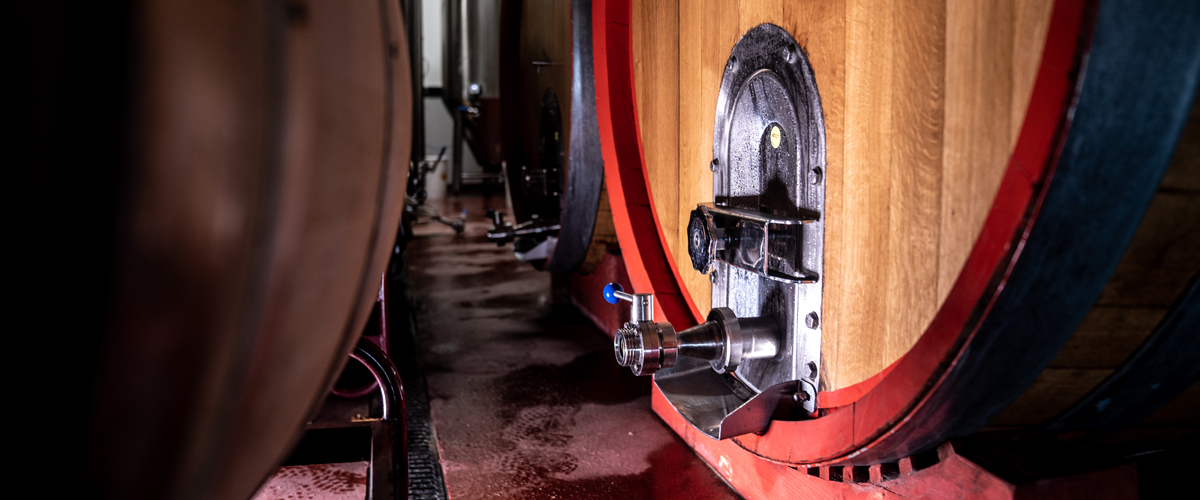
A foeder is a large wooden vessel, most commonly made from oak, used for fermenting, conditioning and ageing beer or wine. At Our Brewery in Randalstown, foeders form an important part of our mixed-fermentation and long-term ageing programme.
They allow us to work with oak, time, temperature and fermentation on a scale quite different from individual barrels. For us, that makes a foeder much more than somewhere to store beer. It becomes part of the fermentation environment itself.
Time is part of the recipe.
What Is a Foeder?
A foeder is essentially a very large wooden fermentation or maturation vessel. The term is most closely associated with the large wooden vessels traditionally used in European winemaking and brewing.
Unlike a conventional beer barrel, which might hold only a few hundred litres, foeders can hold much larger volumes. Their size changes the relationship between beer, wood and oxygen because there is proportionally less wood surface area in contact with the liquid than there would be if the same volume of beer were divided between many smaller barrels.
Foeders can be used for clean fermentation and maturation, but they are particularly associated with beers that benefit from long ageing, mixed fermentation and the activity of specialist yeast and bacteria.
Why Do Brewers Use Oak Foeders?
Stainless steel is an extraordinary material for brewing. It is durable, controllable, relatively easy to clean and largely neutral. But sometimes neutrality isn't what we're looking for.
Wood changes the environment in which beer develops. Oak is slightly porous, allowing very small amounts of oxygen to interact with the beer over time. The vessel itself can also become part of a brewery's fermentation culture, particularly where Brettanomyces and other microorganisms are involved.
The objective isn't simply to make a beer taste strongly of oak. In fact, with the mature foeders we use, the relationship between fermentation, oxygen, wood and time can be considerably more interesting than obvious wood flavour.
We are looking for depth, integration and complexity — characteristics that develop gradually rather than being added as a flavour.
Foeder vs Barrel: What's the Difference?
The most obvious difference is size.
A foeder holds considerably more beer than a conventional wine or spirit barrel. That changes the ratio of beer to wood and can produce a different maturation environment.
With smaller barrels, a greater proportion of the beer is in contact with wood. A larger foeder has proportionally less wood contact for the volume it contains, allowing oak character and oxygen ingress to develop differently.
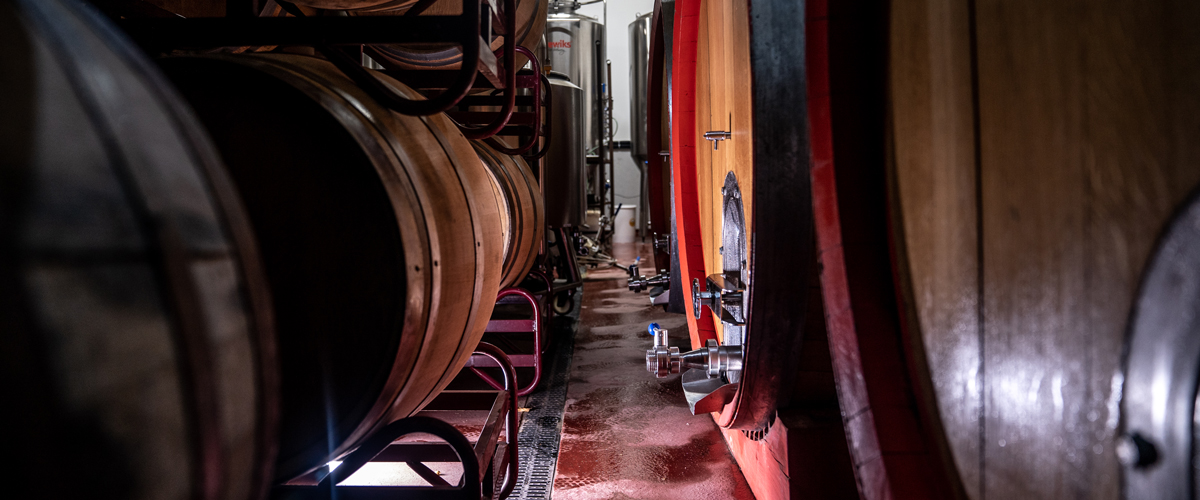
There are practical differences too. Managing one large foeder can provide greater consistency across a volume of beer than ageing that same beer in numerous individual barrels, each of which can develop differently.
That doesn't make one better than the other. We use both because they give us different tools with which to work.
Our Foeders in Randalstown
Building a serious mixed-fermentation programme was something we wanted to do from the beginning of Our Brewery.
Several of our foeders came from French vineyards, bringing vessels traditionally associated with wine into our brewery in Randalstown, Northern Ireland.
Working with previously used wooden vessels requires care. Their history matters, their condition matters and understanding how they behave takes time. Some of our foeders have also been fitted with heating and cooling plates, giving our brewing team greater control over temperature during specific fermentation and maturation projects.
The relationship became so central to what we wanted Our Brewery to represent that the foeder itself helped inspire our brewery logo.
It represents something fundamental to how we think about beer: fermentation, patience and the willingness to give a beer the time it needs rather than forcing it to fit a production schedule.
Foeders and Mixed-Fermentation Beer
Foeders are particularly interesting when used for mixed fermentation.
Rather than relying on a single conventional brewer's yeast strain, mixed-fermentation beer can involve combinations of brewing yeast, wild yeast such as Brettanomyces and bacteria. Over an extended period these microorganisms can create layers of acidity, fruit character, fermentation-derived aromas and other flavours that would be difficult to reproduce through a short conventional fermentation.
Wood adds another variable. Its porosity allows slow interaction with oxygen, while microorganisms can establish themselves within the wooden environment.
That means the vessel can gradually develop its own character.
For us, this isn't about making beer deliberately strange or challenging. The objective is balance. Complexity only matters when the finished beer is enjoyable to drink.
Does Foeder-Aged Beer Taste Like Oak?
Not necessarily.
Oak can contribute flavour, particularly when a vessel is newer, but mature foeders can play a much subtler role.
Depending on the wood, the vessel's history, fermentation culture and length of maturation, you may find elements of spice, vanilla, fruit, gentle acidity or earthy fermentation character. In mixed-fermentation beer, however, much of the complexity comes from the interaction between fermentation and maturation rather than simply extracting flavour from oak.
This is one reason we taste throughout the ageing process rather than deciding in advance that a beer must spend a fixed number of months in wood.
The beer tells us when it is ready.
Why Does Foeder-Aged Beer Take So Long?
Some flavours simply cannot be rushed.
Mixed fermentation and maturation in wood develop over months and sometimes considerably longer. The beer changes as yeast and bacteria continue to work, acidity develops, fermentation character integrates and individual flavours become more coherent.
Our job isn't simply to wait. The brewing team tastes, monitors and makes decisions throughout the process.
Time alone doesn't make a beer better. Time combined with judgement does.
Looking After an Oak Foeder
Foeders require considerably more attention than simply filling a wooden vessel with beer and waiting.
The history and condition of the vessel need to be understood. Cleaning, hydration, temperature, filling, emptying and ongoing sensory evaluation all matter.
Our team regularly tastes beers as they develop and records how their character changes over time. Temperature control can also be used where appropriate, including through the heating and cooling plates fitted to some of our vessels.
Working with wood inevitably introduces more variables than working exclusively with stainless steel. That's part of both the challenge and the attraction.
Our Foeder-Aged Beers
The best way to understand what a foeder contributes to beer is to taste the results. Two beers from our mixed-fermentation programme demonstrate different ways in which time, fermentation and maturation in these large oak vessels can shape the finished beer.
Its Own Pace – Red Flanders Ale
Its Own Pace is a 6.84% Red Flanders Ale that was given four years to develop before release. Fermented with clean ale yeast and mixed culture, it combines soft, rounded acidity with malt depth, subtle oak and notes of red apple skin, cherry and light caramel.
It is exactly the kind of beer our foeder programme was created to allow us to make: fermentation-led, patient and released according to flavour rather than a predetermined production schedule.
Discover Its Own Pace – Red Flanders Ale
Untamed – Wild Ale V1
Untamed V1 is a 7.5% Wild Ale built around spontaneous fermentation, extended maturation and our mixed-fermentation culture. It spent 27 months developing before release, allowing its aromatics, gentle acidity and fermentation character to settle and integrate.
The finished beer is softly tart, dry and aromatic, with citrus peel, orchard fruit, herbal notes and restrained wild-fermentation character. It is bottle conditioned and continues to develop in the bottle.
Discover Untamed – Wild Ale V1
Together, these beers demonstrate why we invested in foeders in the first place. They aren't simply oak vessels or an alternative to stainless steel. They give our brewers another environment in which fermentation, wood, oxygen and time can interact — sometimes over several years — before we decide a beer is ready to leave the brewery.
Bridging the Gap Between Beer and Wine
One of the things that fascinates us about foeders is the connection they create between brewing and winemaking.
Many of the techniques surrounding wooden maturation have deep roots in wine, while mixed and spontaneous fermentation have their own long history within brewing. Bringing those ideas together gives us another way to think about what beer can be.
Our approach isn't about making beer imitate wine. It is about learning from the patience, blending, maturation and sensory judgement associated with both traditions.
These beers require more time, more space and more attention than beers designed for rapid production. We accept that because the objective isn't speed.
It's to make something worth waiting for.
Our Foeder Programme in Randalstown
Its Own Pace and Untamed are expressions of a wider fermentation programme at Our Brewery in Randalstown. Alongside our foeders, we work with individual barrels, mixed cultures, spontaneous fermentation and extended bottle conditioning to explore beers that develop slowly and continue to evolve.
We're not interested in using foeders simply because they look impressive in a brewery. Their value is in what they allow our brewing team to do: work with fermentation over long periods, taste how a beer develops and make decisions according to what is happening in the vessel rather than what a production calendar says should happen next.
That approach has become one of the clearest expressions of why Our Brewery exists.
Good ingredients - Careful fermentation - Patience - Good Judgement.
And release the beer when it's ready.
Beer worth choosing.